Saturday, 29 November 2014

The Ultimate Guide To Foundation

From liquids to powders, expert tips and application - we have created a beauty bible for all things foundation.


Choosing The Right Shade

Don’t think that you have to get the perfect shade match. What’s more important is getting the right undertone. The point of foundation is to make our skin look better, so you can cheat a little bit if you need a bit more warmth or radiance. But to do this, and still look natural, you need to get the undertone right. Fred Letailleur, YSL Makeup Artist for Northern Europe, advises: 'The easiest way is to put three shades you think are close to your natural colour on your cheek and blend. Don’t waste time putting it on your wrist or hands – choose three shades you think are close to your natural colour and dot them in a line on your cheeks. As you blend them it will be obvious which tone suits.'

Brush, Sponge or Fingers?


Fingers for oil based foundation
Foundation that is oil based will work better with fingers. As you work it into the skin, your fingers heat up the oil, which helps it melt into your skin.
Brush for fusion foundations
The new fusion foundations should always be applied with a brush. Letailleur explains: 'Fusion foundations are formulated with volatile oils which evaporate as they touch the skin. You don’t need to use the heat off your fingers to melt it into the skin – it will do that anyway when you blend with a brush.'
Sponge for powder foundations 
A sponge is best used with a powder because it will soak up liquid meaning it won't look too cakey. When used with a powder, a sponge makes it easier to apply thin layers. 'It is always best to build up foundation so start with less than you think you will need', says Letailleur. 'This will keep it natural and lightweight.'
How To Apply
'The biggest mistake women make is applying too much product. The best thing to do is always use less than you think you will need and then touch up the dark circles and rogue blemishes with conealer.'
1. Start with the cheeks and work your way outwards and upwards.
2. Blend sideways over the forehead, going right to the hairline.
3. Use left over product on the chin and neck.
4. Leave the nose till last as this is the centre of the face and the place where people focus on. As little product here as possible will create an illusion of being natural.
Our Top Edit of Foundations
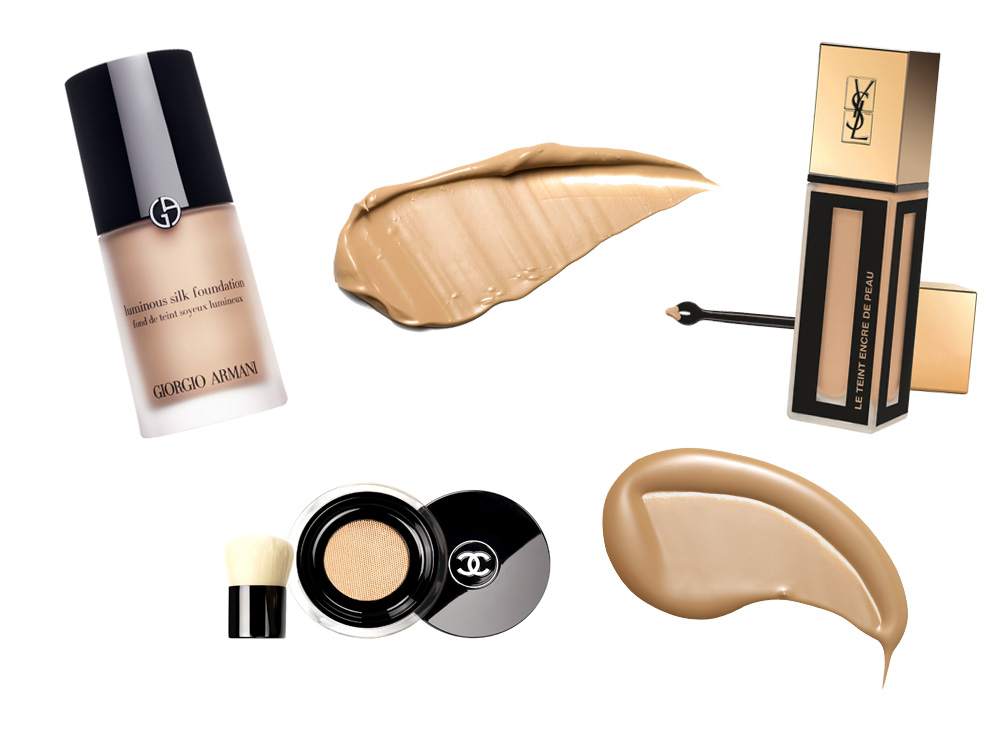
Best for Glow: Giorgio Armani Luminous Silk Foundation, £34.50
Best for Natural: YSL Fusion Foundation, £30.50
Best for Radiance: Clarins True Radiance Foundation SPF15, £27
Best for Concealing: Tom Ford Traceless Perfecting Foundation SPF 15, £62
Best for Blending: Chanel Vitalumiere Loose Powder Foundation, £55 

http://www.marieclaire.co.uk/blogs/547301/the-ultimate-guide-to-foundation.html 

Wednesday, 26 November 2014

15 Ways To Stay Positive At Work

It’s easy to get bogged down with the daily grind of work, but it’s important to stay positive when you’re on the clock. Even if your boss isn’t the type to pat you on the back, there are ways to keep from being bummed out every morning when your alarm goes off. These fifteen easy tips will help you stay positive at work.

1. Keep learning.

Just because you’re not in school anymore and you have a job, you don’t have to stop learning. On-the-job education is the best way to build up your resume. Learn as much as you can from every work experience you have, from presenting during a meeting to giving a tour of your workplace to outsiders. If you don’t have a chance to learn from new things, ask your coworkers or bosses if you can accompany them when they do their duties, and learn about what they do.

2. Teach others what you know.

You want to accompany others when they do their jobs, so offer that opportunity to your coworkers. Instead of helping them out only when they ask, offer to teach them what you know so they won’t have to call you all of the time. It might feel good to be needed (talk about job security!), but when you have your own list of tasks to do, being called to help someone else can be inconvenient. You know what they say: “Give a man a fish and you feed him for a day; teach him how to fish and you have fed him for a lifetime.”

3. Give yourself a break.

You’re on the clock for eight hours a day, and you’re expected to work that entire time, but you can’t really do that. Trying to work nonstop means you’re wearing yourself out, and each subsequent task you do will get a little sloppier as you lose focus and motivation. Take a short break every hour or two. Step away from your desk and stretch, get some fresh air. You might spend five to fifteen minutes not working, but you’ll feel so refreshed by the time you come back to your office that you’ll be ready to get to work immediately.

4. Leave work at work.

It’s important to have time to yourself, your family, and your hobbies. If you work for eight hours, clock out, and then come home to do more work, you’re not going to be excited to go back to work the next day. Make a rule where you have to leave your work at the office. If you don’t complete a task while you’re clocked in, make it a priority for the next morning, but leave it at work. It’s hard not to even think about work while you’re at home because it’s such a large portion of your life, but give it a try. The more you put it out of your mind, the more rejuvenated you’ll feel each morning when it’s time to go back to the office.

5. Build relationships with coworkers.

Your work environment will be more comfortable and fun if you’re friendly with your coworkers. You don’t have to know every detail of their personal lives, or even the names of their children, but having a good back and forth with coworkers, bosses, and associates will make your workplace more inviting. Having a friendly community at work will also make you feel more supported in your work duties, which can help cut stress levels.

6. Participate in after-work activities.

When the clock strikes five, you’re more than ready to go home, but don’t let this attitude take over and leave you out of work events. If some of the crew are going out for dinner or drinks, tag along every once in awhile. This helps build a community in the workplace, and you’ll feel more connected to your coworkers. After all, you might still be with work people, but you won’t be at work, so you’ll still feel like you’re having time outside of the office for yourself.

7. Make your workplace nice.

Whether you have an office, a cubicle, a classroom, or a desk in the middle of a crowded room, make your workplace nice! Check with your boss to see what kind of decorations are allowed, and then bring in some posters that motivate you, or family pictures that make you smile. Even something as small as bringing in your own coffee mug instead of using a Styrofoam cup can make your desk seem more homey. Sitting in an environment that looks nice and makes you feel good will do wonders for your motivation.

8. Volunteer to spearhead a project.

Instead of waiting to be assigned a project and getting stuck with something you might not like, why not volunteer to take on a project? This way you’ll have more control over your tasks and you’ll look great to your bosses. They’ll be thrilled that you’ve willingly taken on more work, and will be more likely to consider you for the best of future projects and maybe even promotions.

9. Concentrate on one thing at a time.

You have a lot of things on your To Do list, but concentrating on one thing at a time will help you be more motivated and focused. If you stay on task until it’s finished, you won’t lose time by multitasking or changing course from one topic to another. By concentrating on one thing at a time, you also are more likely to complete more tasks fully, instead of doing bits and pieces of a bunch of different projects but not finishing any.

10. Set attainable goals.

Instead of setting your sights on the moon, set attainable work goals. It’s good to have dreams, but if you dream too big and don’t make it, you might be discouraged when it comes to accomplishing other goals. If you set attainable goals and meet them, you’ll be more inspired to set more goals you can reach.

11. Use your imagination.

Don’t restrict yourself to straightforward business practices – use your imagination! Take a creative approach to your projects and presentations, and brainstorm any task you’re given to see how you can blow your bosses out of the water.

12. Don’t beat yourself up over mistakes.

If you make a mistake, whether it’s a verbal slip-up in a meeting or a typo in an email, let it go. You can’t beat yourself up over something like that, because everyone makes mistakes. Don’t forget what you’ve done wrong, but learn from it and move on. Take comfort in the fact that people won’t remember it for long, and use it to push yourself to do better next time, so instead of remembering your blunder, they’ll remember your success!

13. Reward yourself for your accomplishments.

Every time you finish a task, pat yourself on the back. When you finish a major project, treat yourself to dinner out or a new movie. It’s just as important to reward yourself for your accomplishments as it is to not beat yourself up over mistakes. Marking something off your To Do list feels good enough as it is, but if you reward yourself, even with something small, you’ll be proud of yourself and want to accomplish more.

14. Surround yourself with positive people.

Stay away from coworkers who bring their negative energy into your life and your workspace. It might be difficult to avoid people if you work in close quarters with them, but you can at least make all of your interactions with them positive by keeping upbeat. Your positive attitude might help them change their tune!

15. Smile more.

Smile when you greet your coworkers and clients. Smile when you walk down the hall. Smile even when you don’t want to smile, and see how much it improves your days! Smiling even if you don’t feel happy will make you feel better, and seeing a smile on your face will make others feel better, too!

http://www.lifehack.org/articles/work/15-ways-stay-positive-work.html

Sunday, 23 November 2014

Fear or Freedom

There are seven areas of life we are here to master; spiritual, mental, vocational, financial, familial, social and physical. They can either be powerfully supportive of your genius, or impeding it. There are also seven common fears and guilt that fragment our full potential in each of these areas and the only difference between somebody who does what they love and someone who doesn’t is the former has the ability to identify their fears and has a strategy to break through them.

You can break through or break down in all seven areas of life. If you break down you’re listening to your fearful self, if you break through you’ve listened to your immortal self. But don’t think that you’re ever going to be without fears in your life, fear means you’re growing and challenging yourself beyond your comfort zones. I have fears almost every day, but I know that fear is an incomplete view of what is occurring, so I identify the fear, bring it to completion and balance, and then walk through it and I suggest you do the same.

“Many of life’s failures are people who did not realise how close they were to success when they gave up.” –  Thomas Edison

The first fear is the spiritual fear of breaking some perceived authority’s ethics. Morals are the rules we impose on ourselves, and ethics are the imposed rules between others and ourselves. Many people let those fears stop them from doing what they love and expressing their genius because they fear that others may not approve of them.

The second fear is the mental fear of not knowing enough. This fear can keep you from doing what you really love, “I just don’t know enough. I’m not smart enough. I don’t have the education for it.” That’s another illusion because you have the capacity to do whatever you dream of doing, at the level you’re on now, and grow to the next. No matter how much you know you will have the unknown. You attract opportunities according to your level of knowing. As you know more you grow more. By loving yourself even when you don’t know you liberate yourself to learn.

The third fear is the vocational fear of failure. You must be able to love failure as much as success since you fail and succeed equally and constantly. Have you ever set yourself goals and didn’t fulfill them? Everyone does. You’re a success and failure constantly throughout your life, and you need both. Babe Ruth had the most home runs and the most strikeouts and that is the magnificence.

The fourth fear is the financial fear of poverty. Here you fear that if you would go out and do what you truly would love to do you won’t make enough money at it. If you love something and are committed to doing whatever it takes to succeed, value money highly, follow the financial laws of success and save you can certainly build wealth doing what you would love.

The fifth fear is the fear of losing your loved ones. Many people feel that if they do what they love they will lose someone they love. I think what stabilized my marriage is that we don’t so much need each other as we just love each other. There’s a big difference. We both have an independent life, and if either of us were to leave, the other would still function.

The sixth fear is the fear of social rejection. This is a big fear. Some people are not doing what they love because they’re afraid people will reject them. The truth is, acceptance and rejection are conserved throughout your life, and the more extraordinary you become the more you will receive of both. Learn to appreciate both equally and you are free. People come and go, they’re transient, but you’re with you for the whole trip and it’s your life. Never sacrifice the eternal for the transient. Embrace both sides of life equally.

“I’d rather have the whole world against me than my own soul.” 

The seventh and last fear is the fear of ill health, death, or disease. Some people don’t live their dream because they’re afraid they’ll die if they do, or they won’t have the energy. But the greatest cause of illness, disease, and death is not living your dreams. That’ll kill you quicker than anything else. Inspiration and gratitude heal and empower, and if you’re not doing what you love you’ll feel ungrateful and desperate,

You can break through or break down in all seven areas of life. If you break down you’re listening to your fearful self, if you break through you’ve listened to your immortal self. But don’t think that you’re ever going to be without fears in your life, fear means you’re growing and challenging yourself beyond your comfort zones. I have fears almost every day, but I know that fear is an incomplete view of what is occurring, so I identify the fear, bring it to completion and balance, and then walk through it and I suggest you do the same.

“Many of life’s failures are people who did not realise how close they were to success when they gave up.” - Thomas Edison 

The seven basic fears that can run your life and keep you from living your life to the fullest are:
Fear of breaking away from the system of a perceived spiritual authority (I don’t want to be considered a bad person and go to hell)
Fear of not having enough mental capability (I am not smart enough. I don’t have the credentials or degree)
Fear of failure – vocational (I won’t succeed, I’ll fall short)
Fear of losing it all financially (I’ll go broke or bankrupt. I won’t make enough money to survive)
Fear of losing loved ones – family (my parents might disown me, my lover will leave me, my friends will hate me)
Fear of social rejection (I am afraid of what everyone will think, I won’t fit in, people won’t want to be with me)
Fear of not having physical capability (I’m not tall enough, strong enough, or good looking enough. I don’t have the energy for all this)

To dissolve any fear you have in any of the seven areas of life, write the fear down and ask yourself:
  • What would be the benefit of the fear happening/being true
  • What would be the drawback if the thing you fear didn’t happen
  • Go back to any past events where you have experienced the fear and ask yourself how experiencing it then assisted you mentally, spiritually, financially, physically, vocationally, socially, in your family.
http://blog.drdemartini.com/fear-freedom/

Thursday, 20 November 2014

Being Beautiful Inside Out

What is ‘Inner Beauty’?
Inner beauty is a natural expression of equanimity of mind, inspiration of soul and a poised state of gratitude and love for ourselves, others and the world in general that radiates as an immortal warmth and openness.

Is it a learned art, or are we born with it?
We are all born with the capacity to express our magnificent inner beauty, but unrealistic expectations on ourselves, others or the world in general can lead to inequity of mind and body and a cloudiness over the shining essence of our beauty within. The arts of poised meditation and yoga can restore our natural inner beauty as can completing the Demartini Method for any inner or outer conflict resolutions.

Can It be maintained day in, day out?
It is improbable that you will sustain such a perfectly poised state of mind and body 24 hours a day, 7 days a week, 52 weeks a year, for a life time. This is unrealistic and can actually initiate the very unrealistic expectation that can cloud your inner beauty. The world around us offers challenging new mysteries that help us grow and expand our awareness and influence. These challenging new mysteries can perturb our poised inner beauty momentarily until we ask a new set of questions and uncover the actual hidden order in our transient and apparent chaos. There is nothing but love and all else is illusion, but we are growing in this awareness daily as we awaken ourselves to our vast inner potential. Nothing is missing in each of us. We become ourselves to the degree that we make everyone else ourselves. Reflective consciousness liberates us from the bondage of our illusive nature and initiates the inner beauty we all radiate from within.

What must be in synergy to obtain ‘internal beauty?’ (i.e. psychological, dietary etc…)
The more poised we are the more we will radiate our inner beauty. When we balance our mind, breath, lifestyle actions and diet we can further enhance the natural emergence of our natural inner beauty.

What are five daily mantra’s to instil ‘inner beauty’ in oneself?
“I am graceful and loving and radiate inner beauty.”
“I am poised and present.”
“I am wise and willing.”
“I am inspired and open to continually expanding.”
“I am in service and fulfilled and rewarded.”
Thank you, I love myself, which is ultimately all else.

Is there a type of ’12 step program’ (for want of a better business model!) to get oneself to inner beauty?
When we feel perturbed, and disturbed, in addition to doing yoga and meditation, it is also wise to ask the following few questions to help restore our natural inner beauty… for the quality of our lives is also based upon the quality of the question s we ask ourselves daily.
What specific perception is perturbing me, or what specifically is occupying and disturbing my mind and having me feel un-poised ?
If it is due to my misperception of others, where and when have I displayed such judged actions? (this calms down judgment)
How do these misperceived actions serve and reward me?
When I too have displayed such actions how have they served those I have affected?
Where have these people that I misperceive to be perturbing me acted in the opposite manner? (this calms down labels and assumptions of absolutisms)
Who was acting in the opposite manner toward me at the same time to balance the equation? (Nature is always synchronously balanced – It is we who misperceive the ever present balance and order)
If they had acted in the opposite manner what would have been the drawbacks? (our fantasies and unrealistic expectations create our disturbances and nightmares)

Why is inner beauty so important for men and women? Boys and girls?
Maximum growth and development in the youth, and maximum sustained wellness in the mature, depends upon sustaining, or at least returning to inner beauty, equanimity and poise. We fullfil our lives most what we are in a state of equanimity and expressing our inner beauty. Beauty is symmetry, proportion and order of mind.

Is there an example of a culture or time in history that really embraced ‘inner beauty’?
Throughout history there have been a few wise masters that have been grateful and centred because of their outward and inward perceptions and who have understood the great hidden order of nature and that have achieved great awareness and levels of poise and presence that inspired and enlightened others. Inner beauty has not been limited to any single culture for it is inherent within anyone who has given themselves permission to be congruent, authentic and inspired.

Does Inner Beauty translate to outer beauty? How?

The magnificence of Inner beauty can transform the outer beauty in anyone willing to be poised and present and grateful and loving and inspired and certain with their mission and true being.

What are some external cosmetic beauty triggers that can make one feel more beautiful inside? i.e. fragrance, massage etc…
Natural essential and fragrant oils, nut and seed oils, lotions, salves, herbs, plant extracts or juices, and vitamins can assist with our outer beauty, and many have been proven to assist for centuries along with massage and movement and rest.

My thoughts on the cosmetic industry and its role in inspiring or defeating inner beauty in consumers:
Any supplemental techniques or procedures from within the cosmetic industry that can assist us with our outer beauty can also assist us with our inner beauty. When we look and feel our greatest on the outside we are more likely to activate our inner beauty. It is a two way street. The world on the inside affects the world on the outside and the world on the outside affects the world on the inside. It is wise to master both forms of beauty. As one gradually fades the other gradually rises.

Anecdotes from my teachings of someone who has really turned their lives around by learning to feel beautiful inside:

Write down everything and anything that you are not grateful for concerning your body on the outside or your life on the inside – anything you have done or not done or anything you do not love about the way you look or feel. Then write down 25 ways in which each of these actions or inactions have helped you and are currently helping you fullfil what you feel you are here to be, do and have on the planet. Do not stop writing how these are all on the way and not in your way until you are grateful for who you are. When you are grateful for who you are and what you have done or not done you are on your way to realising how truly magnificent you are and activating your inner beauty.

What are five things we can say to someone to make them feel beautiful inside?
Thank you for being who you are, just the way you are. I love you.
Thank you for what you contribute to my life and the lives of so many around the world.
Thank you for the difference you make and for exemplifying your uniqueness and inner and outer beauty.
Thank you for your smile and wisdom that has opened up my heart and awakened within me my love for myself.
Thank you fulfilling your purpose and inspiring me to be authentic and fullfil my own mission.

Youth is so applauded in society. How can we teach our children that outer beauty is superficial, and being beautiful inside holds more weight for the world, and in turn, how can we build up older citizens to still feel beautiful and valuable?
As we mature… Nature has a way of assuring that we empower our inner beauty and mysteriously maintain the fading perception of outer beauty. As one 84 year young woman once said to me. By the time you are 84 you probably won’t be able to see them, smell them, hear them, feel them or taste them any longer, so they will be able to look just as beautiful as ever before and you will also rely on their inner beauty. So what will be left will be simply; Thank you, I love you, you gorgeous or handsome thing you.

http://blog.drdemartini.com/beautiful-inside/

Monday, 17 November 2014

8 Ways to Turn Unemployment into a Positive Situation

Unfortunately, unemployment is often associated with negative feelings of fear, unworthiness, and stress. After being unemployed for a while, many will feel that they have lost all purpose and control of life. However, if you find yourself without a 9-5 daily routine, you will soon realise the one advantage that you have over your behind-the-cubicle friends – TIME.

Being unemployed for some time before landing your next job is necessary as it gives you time to improve your knowledge and the skills needed for your future career. Put all your stress aside and follow with me to learn how you can take advantage of a negative situation and turn it into a wonderful experience that can help place you above your fellow job-hunters.

1. Get to Know Yourself.

Take advantage of being unemployed by making a list of your goals and skills.
We are in a constant state of change, and it’s perfectly natural that some of our interests, skills, and weaknesses are evolving as the years go by, therefore a reassessment of our traits is critical if we wish to progress in our career. For that reason, take this time to evaluate yourself, everything from the skills you obtained at your previous employment to your failures and flaws. Make a list of your strengths and weaknesses that will help guide you in addressing future interview questions. Below are some questions that you must ask yourself before considering the next step:
  • Is there something you need to improve or learn? Are you missing a license/certification?
  • What are your drawbacks?
  • What are your strengths? What were you praised for at your last job?
  • Do you enjoy working in a team environment or prefer solo projects?
  • Do you like travelling internationally for business meetings?
This is also a great time to figure out exactly what you want in a career.
  • Is your dream job really your dream job or just something that you’re fooled into believing by friends and family or even society?
  • Did you really like your past job and do you want to repeat the same daily tasks as before?
Converse with yourself to figure out the perfect career that will make YOU happy even after the “honeymoon” stage during employment wears off.

2.    Improve/Modernize a Skill.

Improve and modernize a skill when you're unemployed
A lot of the knowledge that we possess is no longer current due to the constant introduction and easy access to new information and research. A programmer who knows how to work with only code from the early 2000′s is not seen as a viable asset for the company. The purpose of this step is to upgrade a current skill and obtain new knowledge that can be considered very valuable in the eyes of the employer.

It is simple as subscribing to blogs, downloading free guides, reading articles daily, or purchasing a paperback written by an industry leader. You can also join Google Hangouts that pertain to your industry and learn the new trends that can be imperative to your new employer.
Take this time to search through an endless supply of free and paid online courses that can provide you with certification upon completion, such as Udemy. By adding new skills and courses on your resume, it is a great way to show your future employer your time-management skills and most of all, that you value your time. The best thing about this step – you can do this all from the comfort of your favourite arm chair!

3.    Perfect Your Presentation/Interview Skills.

Perfect your presentation skills when you are unemployed
Not all of us are born to be stadium-packing speakers, so if you lack such skills, it is crucial that you begin to practise your verbal and non-verbal behaviour as it can be the deciding point of whether you’ll get the job. Strong verbal communication skills are highly valued by most employers, as they are signs of educated and competent individuals. For this reason, learn new vocabulary to eliminate the ‘ummms’ and ‘yeaas’ when speaking to an interviewer. If you have a strong accent then practise pronunciation.

Research the most commonly asked interview questions and formulate the perfect answer that depicts your interest and skills. Make sure to practise your non-verbal behaviour, such as hand movements, posture and even smiling, as this is vital in creating the best first impression. Studies of the employment process indicate that 65-70% of hiring decisions may be based on non-verbal communication. If you feel the need to walk around your home voicing your answers out loud like a crazy person, do it.

4.    Take Time to Search for Your Dream Job.

When unemployed, use different resources to find job ads to fit your requirements.
Don’t start applying to the first job advertisement you see, rather take the time to figure out what classifies as your dream job and use a variety of tools to find the perfect employer. Use multiple job-hunting sites, such as GlassDoor, Monster, Indeed.com, CareerBuilder and LinkedIn Job Seeker Premium (by upgrading your account) to look for jobs based on your salary requirements, position, location and skill set. A lot of these sites now feature reviews, salaries, and information about the company culture so that you can learn everything you need to know before you apply to ensure that it is the best fit for you.

5.    Put Effort into Developing a Great Portfolio.

Take your best work and make a portfolio that you can show to your interviewer.
Many jobs require for the candidate to provide the employer with a portfolio showcasing their best and latest work; this can be a deal breaker if your portfolio lacks in presentation and quality. Take this opportunity to work on your portfolio by adding new content, purchasing a new binder, or creating title pages. Anything that would make you stand out from other candidates can significantly help your application during the evaluation process. Make sure that it is clean (no coffee stains!) and that the first page includes a hard copy of your resume. Divide your portfolio by sections and use sheet protectors to ensure that your work is safe from fingerprints and accidental dog drool.

6.    Become a Freelancer.

You don't have to sit without a job, become a freelancer to pay bills and learn new skills.
Our office is now our computer with the Internet bringing work to the worker not the other way around. If you are a marketer, graphic designer, web developer, copywriter, artist or editor, this a great opportunity for you to work for international companies from the comfort of your home. A freelance job can help pay for your bills while you search for your dream job. Begin by searching for contract jobs on Freelancer, Guru, and Elance. Additionally, if you land a great gig, you can add it to your work experience, further boosting your image in the employer’s eyes.

7.    Pick Up a Hobby.

Do not despair when you're unemployed, go for a run!
Everyone has at least one thing they love to do but never seem to have time for. Whether it’s going to the gym, knitting, biking, spending time with family and friends or learning to meditate, now is your chance to grow as an individual and experience all of the beautiful things that life has to offer. Let your creativity blossom and you will soon find happiness where there was fear.

8.    Spend Time with Friends and Family.

Enjoy being unemployed by spending time with people that matter to you
We often neglect the people that matter the most, especially when we are pulling 12-hour days or are on strict project deadlines. Call up a friend that you haven’t seen in a while, or a relative that you have ignored, and schedule a time to meet with them. Go for a walk, cook some lovely dish together, enjoy the experience and replace distance with closeness.

Conclusion

You may have found yourself without a job but there is no need to despair. By planning out your days and establishing a routine, you can turn unemployment into a positive situation that can help you transform your insecurities into advantages. Every negative situation will have something positive — even a dead clock shows the right time twice a day. After all, unemployment is temporary, though how you make the most of it is what counts.

http://www.lifehack.org/articles/work/8-ways-turn-unemployment-positive-situation.html

Friday, 14 November 2014

14 Things to Remember When You Think You’re Not Good Enough

Some days are simply worse than others. A day can turn especially bad when you just feel as if you’re “not good enough” for anyone or anything. In other words, just “not good enough.” Here are a few things to remember when those feelings come around.

1. There Really Is More Right With You Than Is Wrong

Time for a little pep talk here. The truth of the matter is that while it may feel like it, you don’t screw up anymore than anyone else. Cut yourself some slack; you are as human as the rest of us and you need to remember that mistakes are part of life. Time to stop comparing yourself with others and live your best life.

2. Accept The “Now” And Move On

There is a certain power to accepting the circumstances and having the mind-set to carry on and move forward. Give yourself the gift of forgiving yourself from the mistake made, the stutter, or the stumble. Forgiveness begins at home and you really should accept the situation as a temporary one in order to move forward.

3. Be Gentle With Yourself

Max Ehrmann wrote, “Be gentle with yourself. You are a child of the universe, no less than the trees and the stars; you have a right to be here.” Gentler, more honest words have ever, ever been written. Psychologists now claim that a shocking secret to success is indeed being kind to yourself. The secret is to value yourself as much as, but no more than, you do others.

4. Focus On Progress Rather Than Perfection

People plagued with the ideal of perfectionism, believe it or not, is a stopping point. The attempt to be perfect, rather than driving you forward, is punishing and stops a forward momentum. Instead, focus on progress made in order to continue down the path of success. Certainly it is not easy, and it’s an issue that many struggle with. The fact is, that no one or thing is ever perfect.

5. Make A Decision To Stop Feeling Terrible

Shockingly, the decision not to perpetuate negative self-talk can be a boost and a boon to negative self-reflection. It takes the mind-set to believe that you are worthy of the challenge and in so being good enough to work through the situation, whatever it may be. In this way, you empower yourself to continue onward.

6. Stay Positive And Move Forward

1-bitt
This is indeed very difficult. It is so very easy to think only of the negative and stay down in the wicked rut. There really is power in positive thinking. Instead of the woulda-coulda-shoulda, think of the can do and will do. Positive thinking puts power in your mind to act instead of staying stuck mulling over the circumstance or the mistake made.

7. Try A Different Angle

Need that passing grade? Or perhaps this is something that simply has to be done and cannot be ignored or move forward from. Maybe it is a task that has to be done, but you feel it is demeaning or degrading. That’s ok. Sometimes changing the way you think of a difficult task may be enough. Or use a different technique for getting the work done.

8. Find A Way To Love Yourself

The key to loving yourself is accepting yourself as you are. Of course, this does not mean not attempting to improve yourself. It does mean accepting yourself for who you are, accepting responsibility for the mistake you’ve made, and moving on. It is important not to stop from any one given mistake, but instead to keep going.

9.  Stop Comparing Yourself To Other People

There can only be one you, warts and all. The truth of the matter is that while we are acutely aware of our mistakes, we rarely see the mistakes of others. We do see their achievements and successes. And unless we live with them, we tend to see others only when they are at their best. No one can be at their best all day, every day. They make mistakes for better or worse, the same as anyone else.

10. Learn To Appreciate What You Have

Certainly you have more than some and less than others. It may help to keep in mind that some people do not have as much as you, even if you only have a little. Get to know someone who has less than you, through volunteering or simply talking with others you may not normally talk too. Practice gratitude by reaching out to the people who have been important in your life.

11. The Truth Is, Life Really Isn’t Fair

1-bitt
And such a cruel truth it is. People who don’t deserve a terminal illness get sick and die. Others have trouble follow them around like an unruly puppy. Unfortunately, there isn’t a whole lot you or anyone else can do about this reality. Get to know others and lean on them when possible. Talk with people who share the same burden to learn how to cope and to help you through life’s tasks.

12. Some Things Are Not As They Appear

1-bitt
Due to the fact that we are really voyeur’s in other people’s lives, we have no idea how they have accomplished one thing or another. For example, one person may have the required experience for a job, while another had the right connections. The fact is, we do not know and have no way of knowing how a person is maneuvering through his or her life.

13. Change What You Can And Learn To Accept What Can’t Be Changed

Take control of areas of your life when you can. A good place to start is how you problem-solve or think about a situation. You can control how a problem is approached and how you will deal with the problem. While nothing can change the past, there are steps you can take toward a brighter future. What are the goals you can begin today toward where you want to be?

14. Don’t Forget To Get Started

1-bitt


It is very easy to simply stop forward momentum and dwell on all that has gone wrong. Make the commitment to change, whatever that change may be. Keep a journal as progress is made. In this way, you can physically see the progress being made. It is always a good thing to break the process into smaller steps while advancing toward a specific goal.

http://www.lifehack.org/articles/communication/14-things-remember-when-you-think-youre-not-good-enough.html