Friday, 31 July 2015

10 Ways To Own Your Healing & Decide What's Best For You

If you’ve recently been diagnosed with some form of disease, you may find yourself reeling in an abyss of the unknown. Exploring the western medicine merry-go-round of tests, surgeries and treatment protocols is scary and confusing. Often it accelerates so fast, you barely have a moment to reflect on what’s best for you.
Although often delivered with a swift slap in the face that leaves you wincing, disease is also an opportunity finally pay attention. To draw focus on spirit. 
We can’t always control what happens to us in life, but we can control our reaction to events. How you navigate your health, and ultimately who you are, is up to you. I’m here to say that you can have a say in your healing and you don’t have to let anyone else decide what's best for you. 
This is your life journey and there is great potential for learning, transformation and immense beauty if you accept the challenge and step up to meet it. Here are 10 ways to help you face the fear, trauma, pain and confusion with more ease, grace and empowerment.
1. Don’t be a victim. 
Recognize yourself as the creator of your life and the circumstances that surround it. Understand that you do have the power to heal yourself. The body is a divine, miraculous organism capable of so much more than you can imagine. Often, when supported with the right foods, healing herbs, and lifestyle choices, it can — and will — heal itself. 
2. Dial up your plants. 
Adopt an organic, non-GMO plant-based diet immediately and cut out all processed foods, wheat and sugars. 
3. Become a neutral expert. 
Collect as much information as you can about your condition while — and this is important — maintaining complete neutrality. Get that MRI, CAT scan, blood work and third opinion from the best doctors and specialists you can find. But don’t stop there. Investigate alternative protocols like homeopathy, Ayurveda and/or Chinese medicine. The more informed you are, the more empowered you become to decide on a treatment plan most suited to you. 
4. Carefully guard the information you collect during your investigation phase. 
The mind is a powerful force (the placebo effect is real, people), so exercise discretion when to comes to sharing your discoveries with others. Connect with supportive people steer clear of naysayers. 
5. Tune in to your emotions. 
I believe it’s called “dis-ease” because there is a block or trauma in your emotional body. This does not mean that you're at fault, only that there is likely something to discover about the deeper aspects of your self. Inquire deeply into your heart and ask yourself tough questions. How is it manifesting for you? What is going on in your life? Seek spiritual counsel around your disease. Reflect on the emotional aspects of your imbalance. 
6. Let go of the need for a quick fix. 
You can’t hack your disease. Make the commitment to fully support your body in the face of disease with all the presence you can muster. Show up for you with all of yourself and commit to a long-term lifestyle shift. 
7. Adopt an attitude of gratitude. 
Make the choice to thank your body for calling attention to the imbalance. Speak to your body and organs, acknowledge them with loving thoughts and emotions. Pledge your support and let your body know that you are committed to true healing. It sounds silly, but it can be highly effective! (It worked for me!) 
8. Choose your support circle carefully. 
Form a close circle of support comprised of just a select few close friends who will have your back. Be judicious! Trust and positivity are required. 
9. Create an iron wall around any naysayers, family or people who do not have the capacity to believe in your healing. 
You have no room for any energy but the absolute highest vision of healing. Choose to live in a state of peace. 
10. Seek role models. 
There are many examples of people across the globe who against all oddshave defied logic and medical science to heal. Research these miraculous cases. Surround yourself with their photos. Plant their stories inside your brain. In some cases it may be appropriate to contact them directly for guidance. This is the internet age after all and you might just be surprised how receptive and willing to help people can be. Every such story can provide support to your healing process. Most of all, understand that you have the potential to achieve the same. Why? 
Because you are a divine being of God.
http://www.mindbodygreen.com/0-18780/10-ways-to-own-your-healing-decide-whats-best-for-you.html


    Wednesday, 29 July 2015

    4 Techniques Used Around The World To Heal Trauma


    The context always differs, but people everywhere share the same emotions of grief, anxiety, anger, fear, and depression that grip us in the aftermath of a traumatic event.
    Anyone can learn these skills, and with practice, they 
    can positively impact the way you respond to everyday 
    stress.
    The nonprofit organisation I founded and direct, The Centre for Mind-Body Medicine (CMBM), teaches tools of self-care and group support to clinicians, educators, and community leaders in conflict zones and after natural disasters in Kosovo, Gaza, Israel, Haiti, southern Louisiana after Hurricane Katrina, New York after 9/11, and elsewhere. 
    We also teach this approach to those in the U.S. who want to use our model to help themselves and others. Our goal is to create a worldwide healing community where people use practical mind-body skills to move through suffering and confusion toward a more hopeful, healthy, and confident future. 
    Throughout my work with CMBM, I’ve consistently used these four skills around the world to heal trauma and bring hope to people affected by war, terrorism, and natural disaster. 
    Anyone can easily learn these skills, and with practice, they can positively impact your life and the way you respond to traumatic events and everyday stress. 
    1. Guided imagery
    Linda EagleSpeaker, a CMBM-trained Native American elder, works with sex-trafficked girls in Minnesota, helping them heal their trauma and reconnect with their culture. Linda uses guided imagery to allow the girls to safely process painful experiences and learn more about their heritage. Linda burns sage and blesses the girls with an Eagle feather and sweet pine powder as they sit in a small group circle. 
    She asks them to envision a comforting scene they can go to when they are under duress. Many of the girls imagine an open field of flowers where they happily play with their family pets and are watched over by their grandmothers. As they expand this scene, the girls create a sense of self-generated safety and their anxiety fades away. 
    Our guided imagery podcast will talk you through an 11-minute guided meditation, and teach you how to create images that will help you find your safe place and answers to the questions and concerns that may be distressing you. 
    2. Soft belly breathing
    In Israel, a group called the Zaka are tasked with picking up body parts after a terrorist attack or accident. Our team in Israel worked with them to integrate mind-body skills into their everyday lives so they could cope with the traumatic scenes they witnessed. The Zaka now do "soft belly breathing" before they go on a call after a disaster and report less stress, greater ease, and less nausea and vomiting as they recover body parts; they meditate with family members whom they are informing of a death and do guided imagery to explore and resolve fears and concerns.
    Soft belly breathing is the most fundamental technique we teach. It balances the “fight or flight” response with the relaxation that comes from our parasympathetic nervous system. You can listen to this podcast from anywhere when you want to begin practicing. Breathe deeply, in through the nose and out through the mouth. This will improve the exchange of oxygen, even as it relaxes your nervous system. 
    Say to yourself “soft” as you breathe in and “belly” as you breathe out. Do this for five minutes two or three times a day — not right after meals, you may fall asleep — and at bedtime, if you’re having trouble sleeping. 
    Use a timer (but not at bedtime) so you won’t be preoccupied with how long you’ve been doing it or how long you have left. Soon, you’ll find that in times of stress you can take a few deep breaths and say, “Soft…belly,” and relaxation will come. 
    3. Drawing Exercise
    Azar Jendia, a young Palestinian girl living in Gaza, witnessed the deaths of her father, two uncles, and an aunt. As a participant in one of CMBM’s Mind Body Skills Groups, she learned to express her grief and trauma through drawings. In an interview for CBS 60 Minutes, Azar describes how the drawings helped her process emotions and regain hope for her future. 
    First she drew her home that was bombed, with the bodies of her family members. Then as her solution to her grief, she drew herself in a coffin, lying as a martyr in a grave next to her father. After nine Mind Body Skills Group sessions, Azar drew a different present and future: she saw herself surrounded by blossoming flowers and green trees, and drew herself as a heart doctor helping to treat people who suffered during the war. 
    To practice the Drawing Exercise yourself, use three sheets of plain white paper and a variety of crayons. You will complete three drawings, in the following order, taking as much time as you like: 
    1. Yourself as you are now 
    2. Yourself with your biggest problem 
    3. Yourself with your biggest problem solved 
    Afterward, you can write about your drawings in a journal and discuss them with a trusted friend, who may help you see the situation from a different perspective. 
    4. Shaking & dancing
    fter the 2005 earthquake in Haiti, I helped lead a training of Haitian clinicians, educators, and community leaders who wanted to learn more about using mind-body medicine in their work in schools, hospitals, and churches. We heard stories of injured people digging themselves out of rubble for hours, brothers and husbands who were killed during outbursts of violence, and women who had lost their children and homes to the earthquake. 
    Everyone in our training had suffered personal losses from the earthquake, and were dealing with the ensuing anxiety, fear, and dread. One group activity we practiced together was “shaking & dancing” to get everyone out of their chairs and back into their physical bodies.
    Shaking & Dancing helps release chronic tension in the body. All you need are two pieces of music and a pause between them. I like to play five minutes of fast, driving music for the “shaking” followed by two minutes of silent relaxation and being aware. 
    Then I switch to upbeat, inspiring music for the “dancing”. Plant your feet shoulder-width apart and bend your knees. Notice how your body feels. Relax your shoulders and close your eyes. As the music begins, shake from your feet up through your chest, into your shoulders, head, and arms. Let your jaw hang open. Pick up the pace. It’s okay to feel silly — just keep going. 
    After the first music ends, stand silently, being aware of your breathing and your body. When the second music begins, let your body move as it wants, freely and spontaneously. No pattern, no name. Just let your body move. After the music stops, take a few minutes to rest and reflect on how you feel now. 
    http://www.mindbodygreen.com/0-18788/4-techniques-used-around-the-world-to-heal-trauma.html

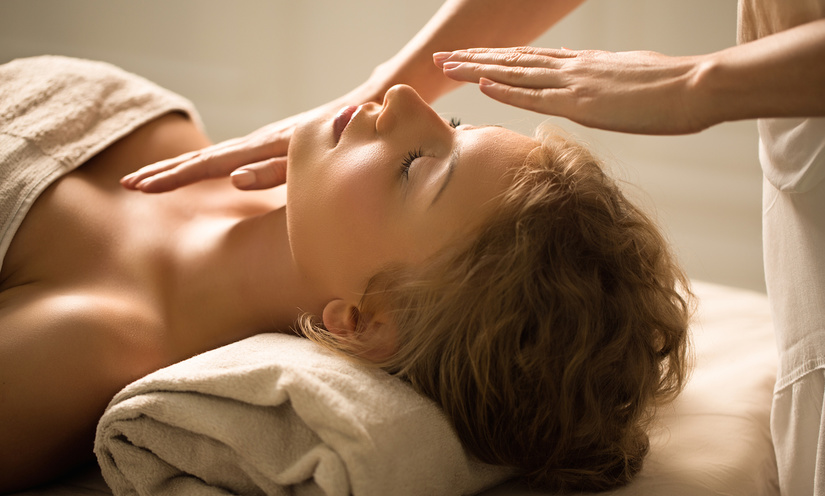
    What To Do Before & After Your Reiki Session For Optimal Energetic Healing


    Below is a list of ideas to take into consideration both before and after your next session. You’ll want to check with your Reiki practitioner and ask for his or her recommendations, to ensure the following recommendations are in alignment with your unique healing path. 
    Remember, your Reiki session is always catered toward your deepest healing, so finding what works best for you is key.
    Before your session:
    1. Relax + reflect
    Give yourself at least 30 minutes prior to the session to sit and reflect, particularly checking in with how your body is feeling and anything you are noticing with regards to emotions, thoughts or physical sensations. 
    Take some time to breathe and also tend to whatever your body's needs might be on that given day. You may also want to reflect on any intentions you want to set for your session, and anything you want to share with your practitioner before you begin. 
    2. Eat + hydrate
    You’ll want to be sure you've eaten and hydrated a few hours before the session, mostly so you will be as comfortable as possible and not distracted by hunger or thirst. 
    Avoid eating a heavy meal beforehand, however, as you don’t want all of your body’s energy to be directed toward digesting while you’re receiving your treatment. 
    3. Get comfy
    Most practitioners will have you laying down for the majority of your session, so comfort is key for being open to taking on and integrating the Reiki energy. 
    Be sure you are wearing comfortable clothes. I usually recommend my clients either wear or bring socks since shoes are removed during the session and the feet can get cold. 
    You’ll also want to use the restroom before the session, and if the position you are in for your session is uncomfortable in any way, communicate this to your practitioner, as s/he will also want to be sure you are as comfortable as possible. 
    After your session:
    1. Integrate
    Many of the treatment benefits can occur as soon as after the session is over and as such, it’s important to find somewhere quiet and relaxing to integrate what may arise. 
    I recommend that my clients take at least 15-20 minutes after the session to meditate, lie down, go for a walk in nature or even take a nap. Try not to book or schedule anything immediately after your session. 
    2. Hydrate
    After doing any type of energy work it’s important to hydrate, so be sure to drink 1-2 glasses of water after your session. I find adding electrolytes to your water can also be helpful, as it helps to replenish the body. 
    3. Eat
    Energy work is often hungry work, and you may find yourself hungry immediately after your session. Be sure you listen to your body and choose a healthy snack or meal afterward if needed. Eating can also help ground the body and as a bonus, you may find that a piece of dark chocolate be quite restorative. 
    4. Reflect
    It’s often helpful to spend some time after the session reflecting, so I often recommend that clients journal, draw or somehow capture any insights they had during and immediately after the session. 
    You may also decide to meditate afterward or listen to calming and/or inspirational music. Whatever you choose to do, find an activity that helps you connect to what you've experienced so you can draw on it in future. 
    5. Contact your practitioner 
    Please get in touch with your practitioner immediately if you experience any overly challenging emotions, physical sensations or issues after your treatment. 
    Reiki is extremely gentle and yet, because energy blockages are being cleared in the body, issues may come up as a result. Find out what the best way is to contact your practitioner, and get in touch if anything feels overly uncomfortable after your session.
    http://www.mindbodygreen.com/0-18832/what-to-do-before-after-your-reiki-session-for-optimal-energetic-healing.html

    Monday, 27 July 2015

    5 Reasons To Give Energy Healing A Try

    The lotus flower grows in the mud. That’s right — the most beautiful flower we know grows in an unappealing environment. How does it do it? It is part of its DNA — the flower is programmed to bloom. 
    It's an inspiring reminder that it doesn’t matter what you grew up in — be it divorce, abuse, or uncertainty — you, too, are programmed to blossom. But first you just have to clear away all that "muddy" energy stored in your body.
    Every thought, deed or action you have done and has been done to you, is imprinted into your energy field or aura. 
    As you ruminate and get stuck in negative thought patterns, you bring that energy closer and closer into your physical body. These thought patterns then create neural pathways in your brain. This often manifests as physical, emotional or mental pain. 
    But what if you could clear the issues from your tissues? What if you could rewire your thinking to more positive thoughts and blossom into who you really are at your core? 
    Energy healing therapy can clear the “mud” off of your energy field. You can and will blossom into who you were always meant to be!
    Here are five ways energy healing can benefit you:
    1. It releases energy blockages so you feel energetically lighter and happier.
    Everything in the universe vibrates, including people. We are vibrating energy bundles. Energy healers help to pull out stagnant and stuck energy — after just one session, you'll feel more expansive and blissful. More often than not, you probably won't even realize you're carrying around all that lower energy until it's cleared away. 
    2. It clears stress and tension to allow deep relaxation.
    Stress is just not felt in our heads, but in our entire bodies. Emotional Freedom Technique (EFT), or tapping, is an effective way to help you calm down. By stimulating acupressure points of the meridians we're communicating to our brain that it is safe to relax. 
    3. It accelerates the body’s natural ability to heal itself and increases vitality.
    Energy healing is a great complement to traditional medical practices and should not be used to the exclusion of allopathic medicine. One way that energy healers can support you is by being conduits of universal energy. Energy healers open themselves up as a channel to bring life force into the client’s body. This energy is thought you trigger your own healing system. 
    4. It can help with acute injuries, chronic health issues and relieve pain.
    The body’s natural state is health and vibrancy. It automatically knows how to heal itself. This incredible intelligence works independently of your mind. 
    Dis-ease in the body often shows us what needs work and what we still need to learn. Because energy flows to where attention goes, it is a powerful force. Energy healing activates and energizes the body’s natural ability to heal. Lower back pain can be a physical manifestation of fear, related to survival issues. Clearing the Root Chakra and kidneys of these blocks can bring much-needed relief over time. 
    5. It helps clear negative emotional and mental thought patterns.
    Unexpressed emotions can get stuck in the body tissue. Ruminating over what happened in the past and feeling anxiety over the future creates what yogis call “chitta vrittis,” or monkey chatter in the brain. When this chatter goes on and on, without your taking time to meditate or calm the mind, creates a blockage. 
    I liken this block to a little dam, in what should be a flowing river of energy. When energy can't flow through that area effectively, we often feel stuck and wonder if we could ever rid ourselves of these thoughts and feelings. 
    http://www.mindbodygreen.com/0-20149/5-reasons-to-give-energy-healing-a-try.html

    Saturday, 25 July 2015

    10 Reasons You Haven't Found Self-Acceptance

    For decades, I avoided mirrors, deflected compliments, deleted tagged photos of myself, all because of shame and insecurities. I was at war with myself. The enemy, my body. 
    When things weren’t going well in my life, my body was to blame. I thought, “If only I were thinner, I’d be more successful, more popular, and I'd finally meet my soul mate.” It never ended. No matter what size my body, whether I was 40 pounds underweight or 60 pounds over, I always felt unworthy.
    The problem was never my body or the actual weight; it was my beliefs about it. The way I looked mattered most, and that pain stayed with me for years. 
    But all that changed when I made falling in love with myself, regardless of my physical size, my full-time mission. Today I accept and love myself. I no longer negotiate with my insecurities. 
    Through my healing journey to finding authentic self-love, I realized everything I wanted in life was on the other side of my shame. 
    I was using my own physical discomfort 
    as a crutch to keep me from living my life fully.
    It was easier to blame my body for things not going well than to take full accountability. 
    Acceptance and accountability have become my new go-to behaviors, replacing several unhealthy ones. My body, just like my life, is a work in progress. Here are the things I stopped doing to find self-acceptance and real love.
    1. I stopped comparing myself to everyone else.
    2. I stopped speaking down to myself.
    3. I stopped listening to what others said about me and instead listened to my own inner voice.
    4. I stopped worrying about the outcome; instead I accepted the moment as it was.
    5. I stopped ignoring my body’s needs.
    6. I stopped thinking I was wounded, broken, or needed to be fixed.
    7. I stopped trusting others’ opinions about my own needs and life.
    8. I stopped trusting others’ advice and instead learned to trust myself.
    9. I stopped thinking there was destination that would make me happy; I learned to appreciate the journey. 
    10. I stopped taking my habits and myself so seriously.
    http://www.mindbodygreen.com/0-20249/10-reasons-you-havent-found-self-acceptance.html

    Thursday, 23 July 2015

    5 Ways Karma From Your Past Lives Affects You Today

    Karma is the memory of our souls, which means it’s often long-standing, even stemming from prior lives. Indeed, the course of our current life is mostly predetermined by earlier lifetimes: what we didn’t finish then we come back to finish now. 
    What we didn’t “make right” in our last life will persistently present itself in this one, like an uninvited guest who won’t leave. Unpleasant situations are the consequence of lingering karma, which can always be reversed and resolved. Acknowledge these five properties of past-life karma that still affect you, in order to erase the energy carried over from former lifetimes.
    Without even knowing it, you may be experiencing karma 
    that originated several lifetimes ago. 
    1. Karma has no expiration date.
    Karma is the luggage your soul carries on its trip from life-to-life. Unfortunately, unlike luggage at the airport, this particular baggage never gets lost, which means you’re stuck with it until you open it up and sort through its ancient contents. Without even knowing it, you may be experiencing karma that originated several lifetimes ago. But when you do dig through your karmic suitcase, then finally, you can confront your outstanding karma and lighten your energetic load. 
    2. No person in your life — from your mother to your spouse to your mailman — is a coincidence. 
    Everyone is placed into your life strategically for a reason. While you have the free will to walk away from or remain with a certain person, karma overpowers free will.
    This means that the course of karmic relationships will play out as planned despite your best efforts. Acknowledge the role of each person in your life: Why are they there? What have they come to teach you and vice versa? What is the karma you’re meant to experience with this person? The sooner you acknowledge the truth of the karma you share with someone (whether it’s good or bad), the sooner you can settle it. 
    3. What you have done, you become.
    Thanks to the media, we often think of karma as “what goes around comes around.” But the reality of karma is more expansive than just being “punished” for our bad deeds — there exists positive karma, just as much as negative karma. If you stole, others will steal from you in following lives. If you nourished, you will be nourished. Your actions throughout your various lifetimes become the circumstances of your being. 
    4. Roles often reverse.
    One of the most fascinating facts about karma is that it often causes us to reincarnate in a reversed manner. This means that your parent may have actually been your child in a former life. Then, before reincarnating in this lifetime, the souls agreed the take on the opposite act. Souls switch genders, too. Positions shift throughout lifetimes based on karmic need; whatever dynamic is needed to repair or heal karma will be manifested through changing roles in our cycle of lives on earth. The people you know now may have had a very different impact on your previous lives! 
    5. Karma repeats to produce new results.
    There’s a greater reason that karma repeats itself, and it’s not to cause you pain; it’s to teach you to take different actions for different results. If you’re attracting the same type of partners into your life over and over again, it’s time to stop and inspect your choices: Why do similar people keep coming in? What should you be doing differently?
    This calls for honest introspection and evaluation of your own faults and weaknesses, which is admittedly hard to do. Don’t be afraid to look within. Recognise what must be changed inside of you so as to change what’s outside of you. Then, you can modify your behavior to end karmic patterns and progress in your potential. 
    Past-life karma is resoundingly present in your current life. Muster up the courage to open your karmic suitcase and rid yourself of its wanted contents today; this act alone will change your destiny for lifetimes to come. 
    http://www.mindbodygreen.com/0-20223/5-ways-karma-from-your-past-lives-affects-you-today.html

    Tuesday, 21 July 2015

    5 Beauty Rules We Can Learn From The Dutch

    Here are five natural beauty tips inspired by the Dutch lifestyle:
    1. You need fresh air for good sleep. 
    The Dutch tradition is to always sleep with a window open to allow fresh air to flow in the room. Follow this custom no matter how cold it is outside. It helps you feel like I have gotten a good, deep sleep — one of the keys of taking care of yourself, both inside and out. 
    2. Cold showers are good for you. 
    Speaking of the cold ... another tried-and-true method popular in Holland is to finish a hot shower with a spray of icy water. This is similar to a spa experience where you follow a stint in a hot steam room with a jump into an icy pool. It's the ultimate refreshing, invigorating practice. 
    3. Let yourself soak.
    We love our baths and soaks in Holland, and to this day, take a soothing, moisturising bath (including a face mask and deep hair conditioner!) to allow all the creams to better saturate my skin and hair as often as you can. 
    It may feel like an indulgent reward, but the benefits are too good to pass up. Plus, there's really no downside to luxuriating in such a treat; it's guilt-free. You won’t feel bad afterward like you may if you overindulge in food or drink, or if you overspend by trying to relax with some retail therapy. 
    4. Hydrate, hydrate, hydrate. 
    Of course, it's even more vital to drink water than it is to soak or shower in it. 
    Drink at least 10 cups of water a day, and follow the Dutch preference for cool or room-temperature water. But if you like to drink your water ice cold, there’s no reason to change. Just be sure to get enough and you'll definitely notice improvements to your skin (and many other bodily functions and systems!). 
    5. Opt for two wheels when you can.
    Try to get outside every day into the fresh air, and it's often on the bicycle. Not only is biking a perfect way to get a daily dose of nature, it’s also a great way to actually get from one place to another. As much as possible, try to ride around instead of taking a cab or the subway to get where you need to be. 
    Besides the fresh air — which is great for your skin! — when you ride, you also get the added benefit of cardio. Getting your heart pumping and blood flowing is great for your body and leads to glowing, radiant skin from the inside out. 
    And lastly, which is a universal piece of wisdom, I think, is to enjoy the good moments in life, laugh and be optimistic and happy. A smile is the most natural beauty enhancer — and it’s completely free. 
    http://www.mindbodygreen.com/0-20269/5-beauty-rules-we-can-learn-from-the-dutch.html

    Sunday, 19 July 2015

    Why Eating Nuts Every Day Could Help You Live Longer

    Avocados may be better than apples at keeping the doctor away, another food might actually give our favorite green fruit a run for its money: nuts. 
    Yes, we know that nuts are good for the heart in general, but what's their effect on specific diseases? 
    In a recent study, Maastricht University researchers kept track of 120,000 Dutch men and women between the ages of 55 and 69 for over 10 years. They found that those who ate about 10 grams of nuts every day were 23% more likely to avoid death from heart attacks, diabetes, respiratory failure, and even cancer.
    And while peanuts were among the nuts associated with lower mortality rates, the scientists found no protective effect for peanut butter. So unfortunately, PB&Js probably won't help to lengthen your life. 
    No need to go nuts with the nuts, though: Eating more than 15 grams of nuts per day didn't seem help any more than 10 did.
    Grab a handful of nuts everyday; it could help you fend off diseases. Seems like a no-brainer, huh?
    Now this is news that's absolutely ... no, I won't say it. 
    http://www.mindbodygreen.com/0-20286/why-eating-nuts-every-day-could-help-you-live-longer.html

    Friday, 17 July 2015

    The Alzheimer’s-Reversing Oil That is Beating Prescription Drugs

    According to the Alzheimer’s Association, the number of people diagnosed with this debilitating disease is on the rise. It is expected that by the year 2050 almost 14 million people will be living with the condition known to rob people of their memory and impose anxiety and confusion.
    Presently, over 5 million people suffer the effects of this disease that is now known as the 7th leading cause of death in our country. It is estimated that over $148 billion is spent each year treating this disease.
    There are no pharmaceutical options available to treat, halt or reverse the symptoms of Alzheimer’s disease. Drugs being created now are made to reduce the amyloid plaques, made from a protein called Amyloid B (AB) that build up on the brain. These are a trademark of the disease.
    Study:  Drink 2 tbs of This Before Bed
    However, recent studies reveal that small clumps of AB call oligomers appear years before the plaques even start to develop. The molecular structure of these oligomers is very different from AB.

    Further, they found that drugs designed to destroy amyloid plaques have no effect on oligomers. This could explain why experimental Alzheimer’s drugs have failed; they are focused on plaques, not their precursor, oligomers.
    Case Study: A Natural Approach
    Mary Newport, MD, has had some up close and highly personal experience with dementia and Alzheimer’s. When her 53 year old husband started showing signs of progressive dementia, which was later diagnosed as Alzheimer’s, she took action.
    He began taking Alzheimer’s drugs such as Namenda, Exelon and Aricept – however, his disease continued to worsen. It was not until Dr. Newport tried to get her husband into a drug trial for a new Alzheimer’s drug that she started to research Alzheimer’s triggers.
    Her research led her to the discovery that some brain cells may have a difficult time using glucose – the brain’s main source of energy. Without this fuel, neurons begin to die. An alternative energy source for brain cells is fats, known as ketones. When the body is deprived of carbohydrates, it naturally produces ketones.
    The hard part is that most people can’t cut carbohydrates out of the body altogether, and in many respects this can be unhealthy. So another way to produce ketones is by consuming oils made from medium-chain triglycerides. MCT is an oil that is made from coconut and palm oil.
    The drug which was being used in the drug trial was just MCT oil at a dose of 20 grams. When MCT oil is metabolized, ketones, which are created by the body, not only protect against Alzheimer’s but may also reverse the symptoms. This is also a potential treatment for Parkinson’s, Huntington’s, type 2 diabetes and multiple and amyotrophic lateral sclerosis.
    Mr. Newport began to take coconut oil twice a day at a point where he could not even remember how to draw a clock. Two weeks after adding coconut oil to his diet his drawing ability improved. After a little over a month, the drawing had more clarity. It appeared as though the oil was lifting the fog.
    After sixty days, he was alert, talkative and happy. He had more focus and concentration and was able to stay on task. He kept taking the same amount of coconut oil each day and the dementia continued to reverse.
    He was able to run again, and his reading comprehension improved dramatically. Over time, his short-term memory returned, and he was able to talk about past events with clarity. When he had a brain scan, the atrophy that had once been present was halted.
    What we Know
    coconut oilWe know that Alzheimer’s drugs have failed. We know that a drug company put a non-patentable natural substance (MCT) through an FDA trial, and it worked. But, it has now been discovered that a natural substance can be substituted for the expensive drug.
    The amazing thing is that the natural substitute works better than the drug version. The ketones actually last for eight hours in the body when coconut oil is used versus three when the synthetic version is used. If this actually catches on, it could bring the drug monopolies to their knees!
    The benefits of organic coconut oil are remarkable and well documented. Always use high quality Extra Virgin Unrefined and Organic Coconut Oil.
    http://www.thealternativedaily.com/the-alzheimers-reversing-oil-that-is-beating-prescription-drugs/

    Wednesday, 15 July 2015

    Discover Your Inner Singing Sensation to Boost Your Mood

    If you feel at your most confident and happy while singing in the shower, but have been told that your pitch doesn’t quite cut it, we have good news for you. New research out of Northwestern University has found that singing on key is a skill that can be developed over time. 
    If you’re one of those people with a naturally beautiful voice and perfect pitch, you should heed this study as well – it suggests that if you stop practicing, your technical vocal skills can go downhill.
    For their study, researchers analyzed the technical singing accuracy of three groups of students: children in kindergarten, sixth-graders and adults of college age. Individuals in each group were tested for their ability to listen to a pitch, and sequences of pitches, and accurately sing them afterwards.
    Special:  These CEREALS destroy your hormones, ZAP your energy, and cause weight gain (avoid these)
    Results showed, not surprisingly, that the sixth-graders sang more accurately than the kindergartners, likely thanks largely to their music lessons, and also likely to brain development. However, the researchers also found that the adults did no better than the kindergarten students on two of the three pitch tasks.

    On the subject of singing on key, and the results of the study, lead researcher Steven Demorest stated, “it’s… a skill that can be taught and developed, and much of it has to do with using the voice regularly. Our study suggests that adults who may have performed better as children lost the ability when they stopped singing.”
    singingDemorest added, “no one expects a beginner on violin to sound good right away, it takes practice, but everyone is supposed to be able to sing. When people are unsuccessful they take it very personally, but we think if you sing more, you’ll get better.”
    So, why sing? If it doesn’t simply make you feel amazing right away, consider it’s health benefits. According to Professor Graham Welch, Chair of Music Education at the University of London:
    “Singing has physical benefits because it is an aerobic activity that increases oxygenation in the blood stream and exercises major muscle groups in the upper body… Singing has psychological benefits because of its normally positive effect in reducing stress levels through the action of the endocrine system which is linked to our sense of emotional well-being.”
    While this study was about singing, we can also take away that other hidden talents we may have – talents we may have dismissed or thought would be impossible to develop – may improve with practice. Even if others have shut us down, if we work at developing our skills and talents, they will flourish.
    So, whatever channel your inner sensation wants to express itself through – whether it’s singing or not – go for it with gusto!

    http://www.thealternativedaily.com/discover-inner-singing-sensation-boost-mood/

    Monday, 13 July 2015

    Coconut Oil and Cannabis Capsule – A Medical Miracle?

    Humans have cultivated and used the flowering tops of the female cannabis plant, known colloquially as marijuana, since history was recorded. Archaeologists in Central Asia even found over 2 pounds of cannabis in a 2,700 year-old grave of a shaman. 
    Written and pictorial evidence of cannabis use is scattered throughout numerous cultures indicating a wide acceptance and use of the plant for thousands of years.
    Drug Classification Halts Use
    Special:  Cut Your Grocery Bill By 91%...
    Federal prohibitions outlawing the therapeutic and recreational use of cannabis were first imposed by Congress with the Marijuana Tax Act of 1937. Later, the plant’s organic compounds (cannabinoids) were classified as a Schedule I substance under the Controlled Substances Act of 1970.

    This classification puts the plant in the same pool as heroin and states that cannabis possesses “a high potential for abuse … no currently accepted medical use … [and] a lack of accepted safety for the use of the drug … under medical supervision.”
    In contrast, cocaine and methamphetamine – illegal for recreational use, may be consumed under a doctors supervision and are classified as Schedule II drugs. Examples of Schedule III and IV drugs include anabolic steroids and Valium. Analgesics that contain codeine are defined by law as Schedule V drugs, the most lenient classification.
    In Support of Therapeutic Use
    Federal lawmakers continue to use the dated drug classification as a means to defend criminalization of marijuana. However, there appears to be very little scientific basis for the categorization of the plant. As its prohibition has passed 75 years, researchers continue to study the therapeutic properties of cannabis.
    There are over 20,000 published reviews and studies in scientific literature that pertain to the cannabis plant and its cannabinoids, almost one-third of these have been published in the last 4 years. A keyword search on PubMed Central (the US government library of peer-reviewed scientific research) shows 2,100 studies alone since 2011.
    Modern culture is now catching up on what our ancestors knew, and public opinion and relaxing state legislation are leading the way for more people to use medicinal marijuana for a wide number of medical conditions. At present, marijuana for medical purposes is legal in 20 states and the District of Columbia.
    While the debate continues to boil at both state and federal levels, there has been a strong and growing trend of acceptance related to the growing body of scientific evidence indicating that marijuana may indeed contain some powerful medicinal properties that we would be foolish to overlook.
    Joycelyn Elders, MD, former US Surgeon General, wrote the following in a Mar. 26, 2004 article titled “Myths About Medical Marijuana,” published in the Providence Journal:
    “The evidence is overwhelming that marijuana can relieve certain types of pain, nausea, vomiting and other symptoms caused by such illnesses as multiple sclerosis, cancer and AIDS — or by the harsh drugs sometimes used to treat them. And it can do so with remarkable safety. Indeed, marijuana is less toxic than many of the drugs that physicians prescribe every day.”
    Ray Cavanaugh, PhD, National Director of the American Alliance for Medical Cannabis (AAMC), wrote the following in a 2002 article titled “The Plight of the Chronically Ill,” posted on the AAMC website:
    “Many of the chronically ill have successfully sought relief with the use of medical cannabis, an age-old remedy that now shows real scientific efficacy. Hundreds of thousands of the sick have replaced disabling narcotics and other psychotropic medications with nontoxic and benign cannabis. The anecdotal evidence is overwhelming. Folks with spinal injuries able to give up their walkers, AIDS patients able to gain weight and keep their medications down, cancer patients finding relief from the terrible nausea of chemotherapy, chronic pain patients once again functional with their consciousness restored from narcotic lethargy, and folks once disabled from crippling psychiatric disorders and addictions, returned to sanity and society with the assistance of a nontoxic herb with remarkable healing powers.”
    The American Nurses Association (ANA) wrote the following in its Mar. 19, 2004 “Position Statement: Providing Patients Safe Access to Therapeutic Marijuana/Cannabis,” posted on the ANA website:
    “The American Nurses Association (ANA) recognizes that patients should have safe access to therapeutic marijuana/cannabis. Cannabis or marijuana has been used medicinally for centuries. It has been shown to be effective in treating a wide range of symptoms and conditions.”
    Researchers at the University of California Center for Medicinal Cannabis Research announced findings from a number of randomized, placebo controlled clinical trials on the medical utility of inhaled cannabis in 2010.
    The studies used the FDA ‘gold standard’ clinical trial design and reported that marijuana should be the “first line of treatment” for patients suffering from neuropathy and other serious illnesses.
    Neuropathy is a type of pain associated with diabetes, cancer, spinal cord injuries, HIV/AIDS and other debilitating conditions. The trials indicated that marijuana controlled pain as good or better than available medications.
    Scientists continue to study the effectiveness of cannabinoids all over the world. In Germany there have been over 37 controlled studies, with over 2,500 subjects, assessing the safety and efficacy of marijuana, since 2005. In contrast, most FDA-approved drugs go through far fewer trials with less subjects but are approved for use.
    The research on cannabis has shifted from studying its ability to alleviate symptoms of disease such as nausea associated with chemotherapy to its potential role in modifying disease. Medical marijuana has been shown to slow the onset of Alzheimers disease and moderate autoimmune disorders including multiple sclerosis, inflammatory bowel disease and rheumatoid arthritis.
    Cannabis and Coconut Oil
    Medical marijuana capsules infused in coconut oil are an alternative way to therapeutically use cannabis without having to inhale it through smoking. Infusing cannabis into coconut oil also allows for easy entry into the liver where it can be rapidly processed.
    Coconut oil is used because of its high amount of essential fatty acids which makes it a good binding agent for the cannabinoids. Not to mention its amazing health properties. Half of the fat in coconut oil is comprised of a fat that is not frequently found in nature, lauric acid.
    Lauric acid has been called a “miracle” ingredient due to its health promoting capabilities and is present in a mother’s milk. In fact, it can be found in only three dietary sources—small amounts in butterfat and larger amounts in palm kernel and coconut oil.
    In the body, lauric acid is converted to monolaurin, which is a potent antiviral, antibacterial and antiprotozoal substance. Because monolaurin is a monoglyceride, it can destroy lipid-coated viruses including measles, influenza, HIV, herpes and a number of pathogenic bacteria.
    Testimony – A Success Story
    While many remain suspicious of the therapeutic benefits of cannabis, Stan and Barb Rutner are convinced of its efficacy. This couple has stood in the face of cancer a number of times and survived to learn from their experiences.
    Barb had two bouts of breast cancer and Stan was diagnosed 20 years ago with non-Hodgkin lymphoma which, after treatment, disappeared. However, in 2011, it returned. Cancerous nodes in his lungs were diagnosed and later he was told that the cancer was in his brain. The outlook was grim indeed.
    medical marijuana
    As he went through the harsh treatment of chemotherapy and radiation, Stan and his family wanted to find a natural solution that would help improve his quality of life and even prolong it. Hearing that cannabis was effective in helping with the pain and other effects of chemotherapy for cancer patients they were more than open to give it a try. According to Stan and Barb, medical cannabis was the golden ticket.
    The Rutners daughter, Corinne and her husband did some research and it was decided that daytime cannabis capsule infused in coconut oil would be a good choice. After two weeks of taking the capsule, Stan was able to give up his oxygen tank that he was tied to around the clock. He began to gain weight, sleep better and get stronger overall. After several months, a brain scan revealed that Stan was completely cancer free.
    The Rutners are convinced that cannabis works as an anti-cancer medicine. According to John, the Rutners son-in-law, “There is no doubt in my mind that cannabis pulled my father-in-law out of the wasting stages of cancer and enabled him to gain strength and in turn fight this horrible cell malfunction with success. While many would say that the chemo and radiation could have played apart, he would never have lived long enough to find out without cannabis oil.”
    http://www.thealternativedaily.com/coconut-oil-cannabis-medical-miracle/